
What is the difference between YouTube and Twitch?
Learn the main differences between Twitch and YouTube and how to choose the right platform to launch and broadcast a live stream.
March 12, 2026
The streaming world has known meteoric growth in recent times, fuelled by the emergence of leading platforms like Twitch and YouTube. These platforms have opened up a world of possibilities for content creators and broadcasters, facilitating their connection with a large audience in ways that have never been seen before.
But how do these two social networks differ?
If you are considering livestreaming and are not sure which platform to choose, this article will help you Understand the main differences between Twitch and YouTube. Whether it is in terms of user experience, target audience or monetization opportunities, we reveal the key criteria to consider in order to identify the most suitable platform for your brand.
Introducing Twitch and YouTube
Before doing the Comparing Twitch and YouTube, it is crucial to understand what each platform has to offer
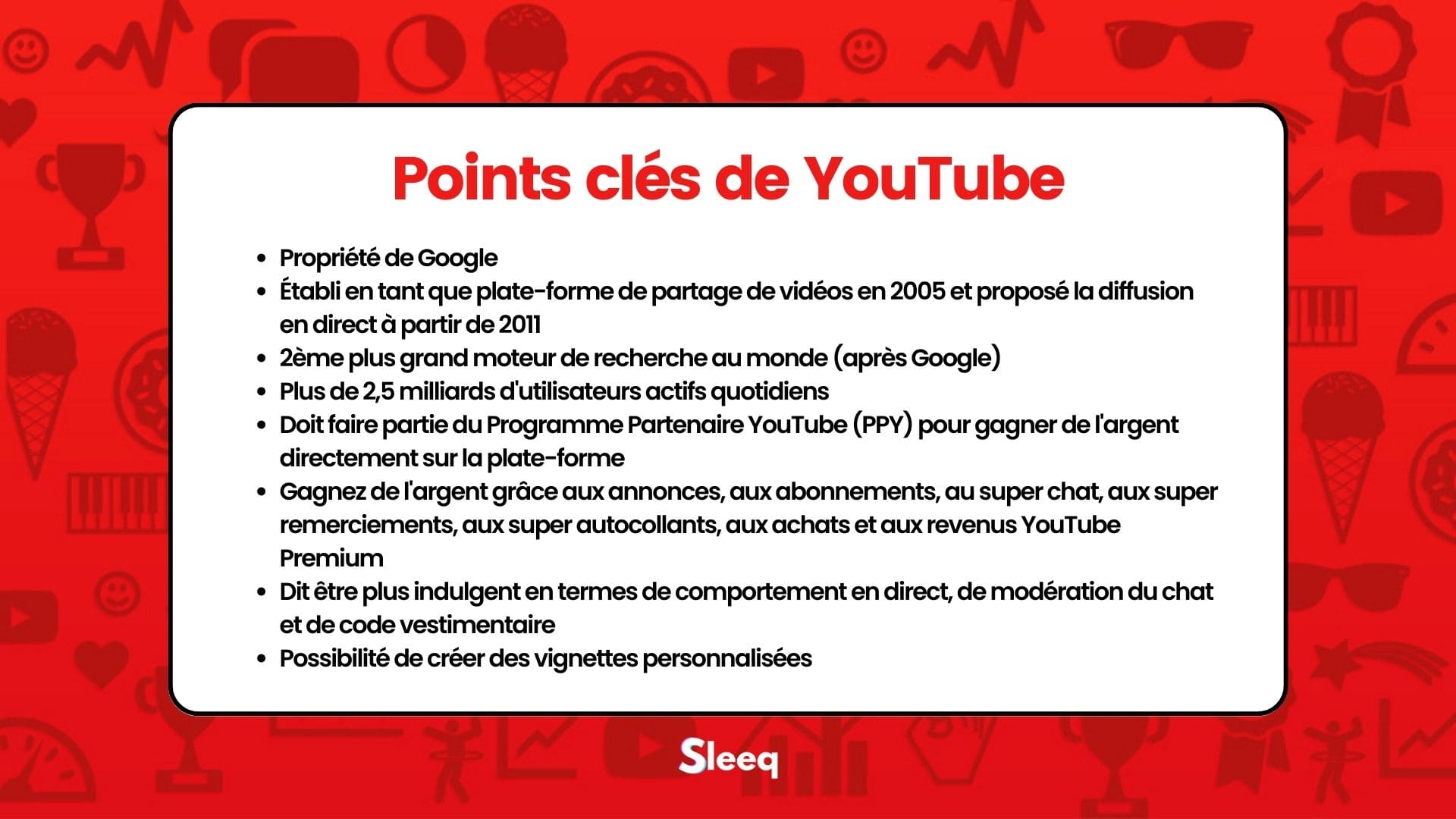
Launched in 2005, youtube is a video sharing site that allows users to view, like, share, comment, and upload their own videos. Although the platform is mostly known for its pre-recorded content such as tutorials, vlogs, video essays and sketches, it also offers a live streaming service: YouTube Live. This service offers creators the ability to stream content in real time, while their subscribers can interact via live chat.
Since 2021, the Livestreaming has taken an increasingly important place on YouTube. According to BusinessOfApps, Over 5 billion hours of live content were watched on YouTube in 2021 only. Statista also notes that 5% of Twitch viewers also watched a livestream on YouTube during the same period.
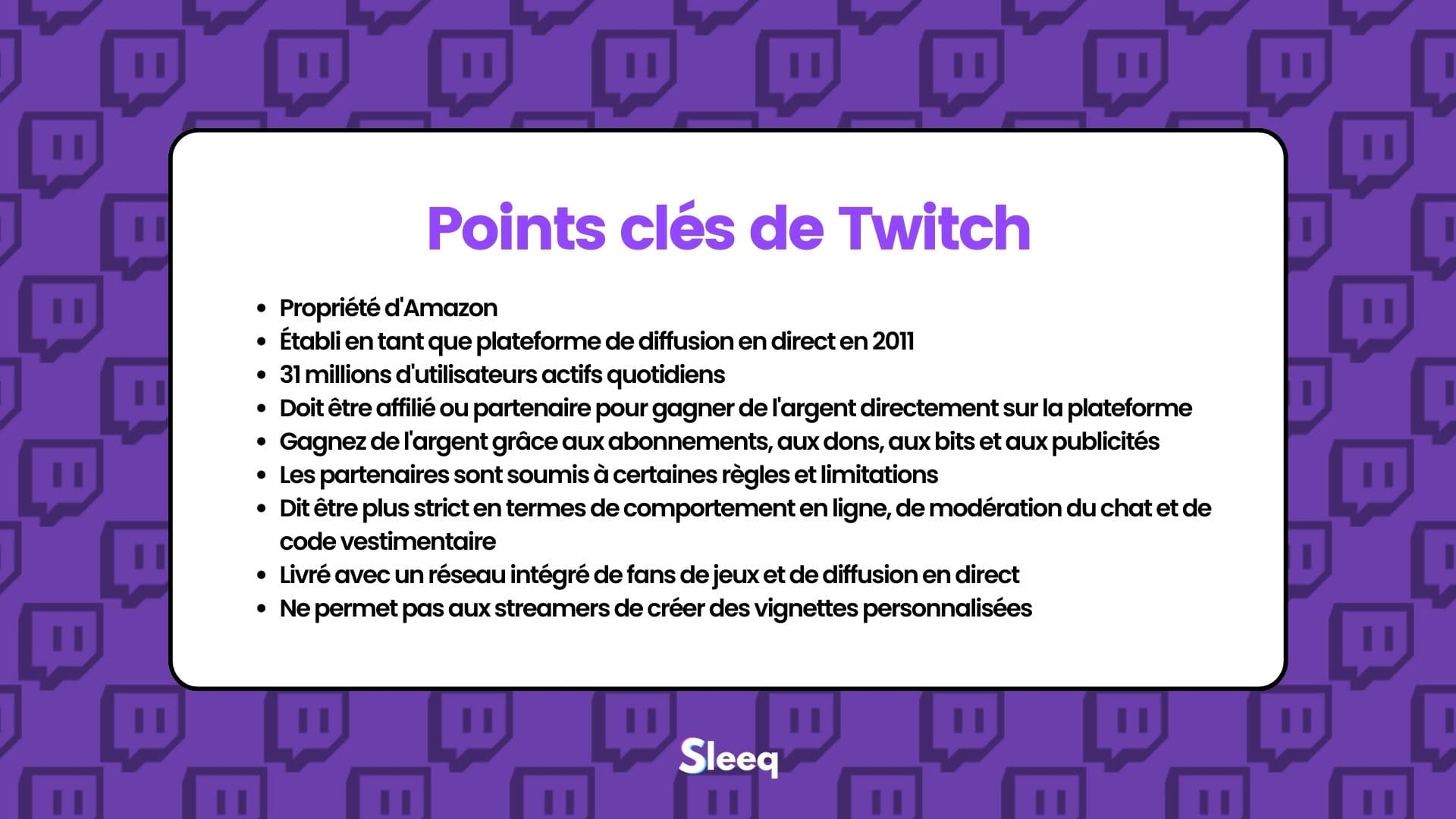
As for Twitch, this more recent platform, which appeared in 2021, quickly focused on live streaming, especially in the field of gaming. Today, Twitch dominates the livestreaming market with over 18.5 billion hours of content viewed since the start of the year. Although other types of content have emerged on the platform, gaming remains predominant, attracting a large portion of the Twitch community.
What are the main differences between Twitch and YouTube?
If you are hesitating between YouTube and Twitch to position your brand in the world of livestreaming, several elements must be taken into account. Despite their similarities in terms of live broadcast, Of advertising and Of partnerships, these two platforms offer distinct experiences and growth prospects.
Here are the key differences between Twitch and YouTube:
The browsing experience
Twitch and YouTube, while both search engines, have different approaches to recommend content to their users.
Twitch, mainly designed for live streaming, tends to focus on the most popular streamers. Its interface is optimized for the discovery of new streamers, with a search function based on games or specific types of content such as speedrun or IRL (In Real Life) content. However, the platform does not allow users to customize their tiles.
On the other hand, benefiting from the support of Google, YouTube makes research more accessible for beginners thanks to a customizable vignette feature, which gives creators more creative control and opportunities for promote their content. Its navigation feature is designed to search for videos, creators, or YouTube brand accounts on specific topics. With regard to content recommendation, YouTube prioritizes the relevance of content based on the user's viewing habits.
Thus, these two platforms offer distinct experiences in terms of content search and discovery, with Twitch favoring popular streamers, and YouTube emphasizing the relevance of the content for the viewer.
Content rules
With regard to content regulation, Twitch and YouTube have different requirements.
Twitch, although less strict than YouTube on the type of content broadcast, still imposes certain limits. Because live streams are more difficult to moderate, Twitch doesn't require the same level of validation that YouTube does for its pre-recorded videos. However, that doesn't mean everything is allowed on Twitch. The platform strictly prohibits nudity, sexually suggestive content, violence, and hate speech.
For its part, YouTube has more stringent content policies. The platform has zero tolerance for suggestive or violent content, even if it's not explicitly graphic. In case of violation of its rules, YouTube uses a three-warning system before taking action, while Twitch has a reputation for banning creators without notice, whether they have contracts or not.
In short, the two platforms have significant differences in content guidelines, with YouTube being more stringent, while Twitch is sometimes more stringent in enforcing its policies.
Audience and growth
With respect to growth and audience, YouTube, and Twitch offer unique opportunities and challenges.
Thanks to a efficient algorithm, YouTube is making it easy for small creators' channels to grow rapidly. However, Twitch, with an approach that focuses more on popular content streamers, offers more limited growth opportunities for newcomers
However, with regard to audience and viewing time, Twitch is taking over, with 3.3 million simultaneous viewers in 2022 and an impressive 21 billion hours of content watched. Much of this growth has been fuelled by the pandemic. By comparison, YouTube, in its Gaming category, counted 705K simultaneous viewers and 10 billion hours of viewing over the same period.
Regarding demographics, YouTube attracts an audience mostly aged 25 to 44, with 80% who watched at least one video during the month. On Twitch, the audience is younger, with 75% users between the ages of 16 and 34.
As for growth opportunities, YouTube, thanks to its algorithm, favors the discovery of small creators by new users, while Twitch tends to favor streamers who already have a large community. However, Twitch requires stronger engagement from its users, requiring regular live streams and interaction with subscribers to develop a channel.
Monetization and partnerships
Twitch and YouTube present a variety of options for enable their content creators to generate revenue. These options include advertising revenue, brand partnerships, subscriptions, donations, and even the sale of merchandise.
Twitch has developed a range of monetization options including paid subscriptions to some creators via The Twitch Prime service, the endowments live during the livestreams, the sponsored ads and even the affiliate programs. Additionally, Twitch makes it easy to become an affiliate or partner. Its eligibility criteria are in fact less stringent in terms of the number of subscribers and viewing hours than those of YouTube. This two-tier system makes it easier for streamers to start monetizing their channels.
YouTube allows creators to benefit from contextual advertising thanks to Google Adsense, which can significantly improve the conversion rate. In addition, YouTube transfers 55% of advertising revenue to its creators, which is a significant advantage. The platform also offers features such as Super Chat and Super Stickers, which allow viewers to support their favorite creators by sending highlighted messages during live shows. Unlike Twitch, YouTube only offers the YouTube Affiliates program for YouTubers who want to monetize their content.
Which is better: Twitch or YouTube?
There is no absolute answer to the question of whether you should Choose YouTube Live or Twitch for your live broadcasts. Indeed, both platforms have undeniable advantages. While YouTube can boast a higher number of daily active users, Twitch reigns supreme when it comes to livestreaming, especially in the field of video games.
If your goal is to reach a young audience and create a community passionate about your brand, then Twitch could be the best choice. This platform is entirely dedicated to livestreaming and offers numerous opportunities to interact with your audience.
As for YouTube, while its growing commitment to live formats is notable, the platform remains primarily oriented towards the distribution of pre-recorded and edited videos. It is widely appreciated by content creators because of the numerous monetization opportunities it offers. Moreover, for a brand, YouTube can prove to be a valuable ally. In fact, thanks to search engine optimization (SEO), a brand has the possibility ofincrease the visibility of your channel on the Google search engine, thus ensuring greater reach.
{{cta}}





.avif)