
Creative marketing strategy: how brands win with creators
Creative marketing strategy: how brands win with creators
April 24, 2026

The landscape of creative marketing strategy has fundamentally changed. Brands are no longer chasing influencers for one-off posts, and they're building lasting partnerships with creators who become extensions of their marketing teams. The creative economy has now surpassed 250 billion dollars globally, according to Goldman Sachs research, reflecting this massive change. Whether you're launching a startup or scaling a Fortune 500 brand, master the creative marketing strategy is essential for reaching audiences that traditional advertising has difficulty penetrating. The Sleeq platform helps brands develop and execute creative marketing strategies that generate 10M+ views and a measurable ROI thanks to authentic creative partnerships. Discover our case studies to see how brands are succeeding. Learn how to build a creative marketing strategy that delivers real business results.
Understanding the Creative Economy and Modern Marketing Changes
The rise of the creative economy represents a fundamental reversal of media power. Ten years ago, brands controlled the story through distribution channels. Today, creators control the cultural conversation. Your creative marketing strategy must take into account this power dynamic. Platforms like TikTok, Instagram, and YouTube have democratized content creation, allowing individuals to build audiences of millions without traditional gatekeepers. This change means your brand is competing not against other ads, but against high-quality content and authentic stories.
What defines the creative marketing strategy modern? It goes beyond the “influencer marketing” playbook from the 2010s. Rather than buying temporary attention via sponsored posts, brands are now acting like content studios, co-creating with creators through our content creation service. This producer mindset generates multiple assets simultaneously, TikToks, Reels, Instagram, Instagram, long-form YouTube, and branded content, all while maintaining creative authenticity. Data supports this evolution: campaigns built on long-term creative partnerships outperform one-off sponsored posts by 40-60% in terms of engagement and brand lift metrics.
- Creator-led strategy : Prioritize creative voice and audience relationships over brand control
- Multiplication of content : Extract 5-10 assets from unique creative collaborations across channels
- Authentic partnerships : Build relationships of 6-12 months rather than one-time transactional posts
- Performance responsibility : Track reach, engagement, conversions, and brand sentiment in real time
Key Components of an Effective Creative Marketing Strategy
Building a creative marketing strategy sustainable requires understanding four interconnected components: audience alignment, content format selection, partnership structure, and performance measurement. Many brands fail because they treat these elements as separate initiatives rather than as an integrated system. Your creative marketing strategy should specify exactly what audience segments you're targeting, what creators are genuinely reaching those audiences, and what content formats advance your business goals, awareness, consideration, consideration, conversion, or retention.
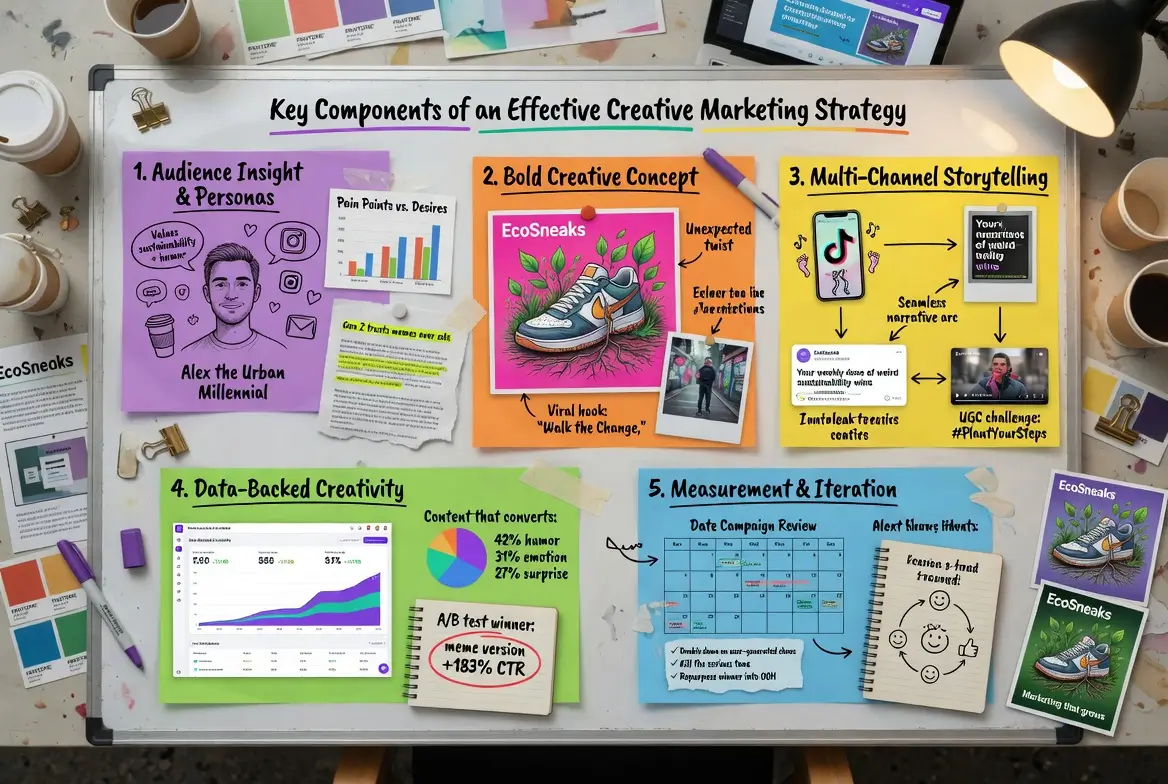
Audience alignment is non-negotiable. A creator with 500K followers is worthless if those followers don't match your target market. Demographics tell only part of the story; psychographics reveal whether a creator's audience shares your brand values and buying models. For influence and creative partnerships, Sleeq analyzes audience quality metrics alongside vanity numbers, ensuring that brands partner with creators whose followers represent real business potential. Format selection follows naturally once you understand your audience. Gen Z consumers scrolling on TikTok are asking for 15-60 second vertical videos; financial professionals on LinkedIn expect longer-form analysis. Your creative marketing strategy should specify three to five key formats that align with the channel's audience behavior and your brand story.
- Audience segment mapping : Define which creator audiences correspond to each customer segment
- Format-channel alignment : Match content formats to platform algorithms and audience consumption models
- Message architecture : Develop core brand messages that remain consistent across creative variations
- Partnership third parties : Structure relationships by budget, scope, and creator tier (micro, mid, macro)
Creative Partnership Models: Which Approach Fits Your Goals
Not all creative relationships work the same way. Your creative marketing strategy must distinguish between five distinct partnership models, each with unique cost structures, creative control implications, and ROI profiles. Understanding these models allows you to allocate the budget strategically between partner types, maximizing the impact for your business goals. User-generated content partnerships cost significantly less than brand ambassador contracts, but can deliver greater authenticity; the key is to match the model to the campaign objective.
La creative marketing strategy modern integrates several models simultaneously. You could deploy UGC for volume and authenticity, sponsored content for reach, and creative collabs for deep storytelling. Each model serves distinct purposes in your larger story. Platforms like TikTok Creator Marketplace, Instagram Collabs and YouTube BrandConnect have formalized these relationships, reducing friction for brands seeking structured creative partnerships. The branded content service by Sleeq positions creators as co-producers rather than talents, generating 10M+ views via creative-first storytelling rather than traditional ad formats.
Each model has distinct advantages. UGC creators produce authentic content at scale with minimal brand interference, perfect for e-commerce and performance campaigns where volume matters. Sponsored posts exploit creator audiences for reach but sacrifice authenticity. Brand ambassadors provide consistency and reliability but require longer commitments. Co-creation generates premium storytelling and emotional connection, ideal for category leaders positioning themselves against competitors. Whitelisting, where brands pay to amplify creative content using brand advertising accounts, builds a bridge between marketing performance and organic authenticity, delivering higher conversion rates compared to traditional display advertising.
Building Your Creative Marketing Strategy Framework
Les creative marketing strategies Successful projects follow a repeatable framework composed of five sequential phases: goal definition, audience mapping, creative sourcing, campaign execution, and performance analysis. This structured approach replaces the ad-hoc “find and pay influencers” mentality that dominated the 2010s. Your framework should answer fundamental questions: What business goals does creative marketing serve? What customer audiences does creative content reach most effectively? Which designers are genuinely aligned with your brand? How will you measure success?
Setting goals establishes what success looks like. Awareness campaigns targeting new audiences require different creators and content than conversion campaigns targeting existing interest. A financial services brand pursuing consideration could partner with business designers discussing industrial trends, while an apparel brand pursuing conversion collaborates with fashion designers demonstrating products. Your creative marketing strategy should specify measurable KPIs related to business results, reach and impressions for awareness, CTR and landing page traffic for consideration, conversion rates and CAC for conversion campaigns. This clarity prevents misalignment between brand stakeholders and creative partners.

Audience mapping translates business goals into audience segments and then identifies which creators genuinely serve those segments. One creative marketing strategy Sustainable maintains a database of 50-200 qualified creators segmented by audience demographics, psychographics, engagement rates, and content format specialization. Rather than pursuing viral creators, effective strategies focus on niche creators with a high audience alignment and genuine passion for your category. For the social media management and creator coordination, Sleeq identifies these aligned creators, manages the logistics of relationships, and ensures the consistency of the message through partnerships.
- Define business KPIs : Specify metrics related to revenue, brand awareness, consideration, or conversions
- Segment your audience : Map customer segments to creator audiences and content preferences
- Build a creator database : Maintain detailed profiles of 50+ creators by niche, audience quality and engagement
- Establish the budget allocation : Distribute the budget between third-party creators and partnership models
- Create content guidelines : Develop briefs that balance creative freedom and brand message requirements
Content Co-Creation: The Premium Approach to Creative Marketing Strategy
Les creative marketing strategies The most sophisticated treat creators as co-producers of content rather than as performance channels. Content co-creation generates higher quality storytelling, stronger audience connections, and better performance compared to traditional advertising. Rather than requiring creators to read a brief and produce assets, co-creation collaborates with creators to develop narrative themes that excite both the brand and the creator's audience. This approach recognizes that creators have a deep understanding of their audiences; their input improves campaigns across metrics.
Implement content co-creation in your creative marketing strategy requires different processes than traditional sponsored content. Instead of transactional briefs, develop collaborative frameworks where creators shape the direction of the campaign. Brands benefit enormously from creative input on product positioning, message angles, and content format selections. When creators feel invested in creative decisions, their passion translates into audience authenticity, increasing engagement by 50-100% versus prescribed content. Data shows that audiences distinguish between content that creators find really interesting versus promotional mandates. Your creative marketing strategy should allocate 40-50% of the budget to co-creation campaigns that prioritize creative collaboration over direct brand control.
Sleeq's approach addresses each brand as a content studio, with an emphasis on creative input and audience-based storytelling. Rather than producing ads disguised as content, co-creation generates entertainment, education, or inspiration that audiences actually want to consume. This change in positioning is very important. A fitness device campaign could evolve from “buy our leggings” to “how athletes define their training philosophy,” positioning your product in larger stories that creators and audiences find compelling. This narrative framework increases both brand safety and performance; audiences engage because they truly find the content valuable, not because they condone ads.
Long-Term Creative Partnerships vs One-Time Campaigns
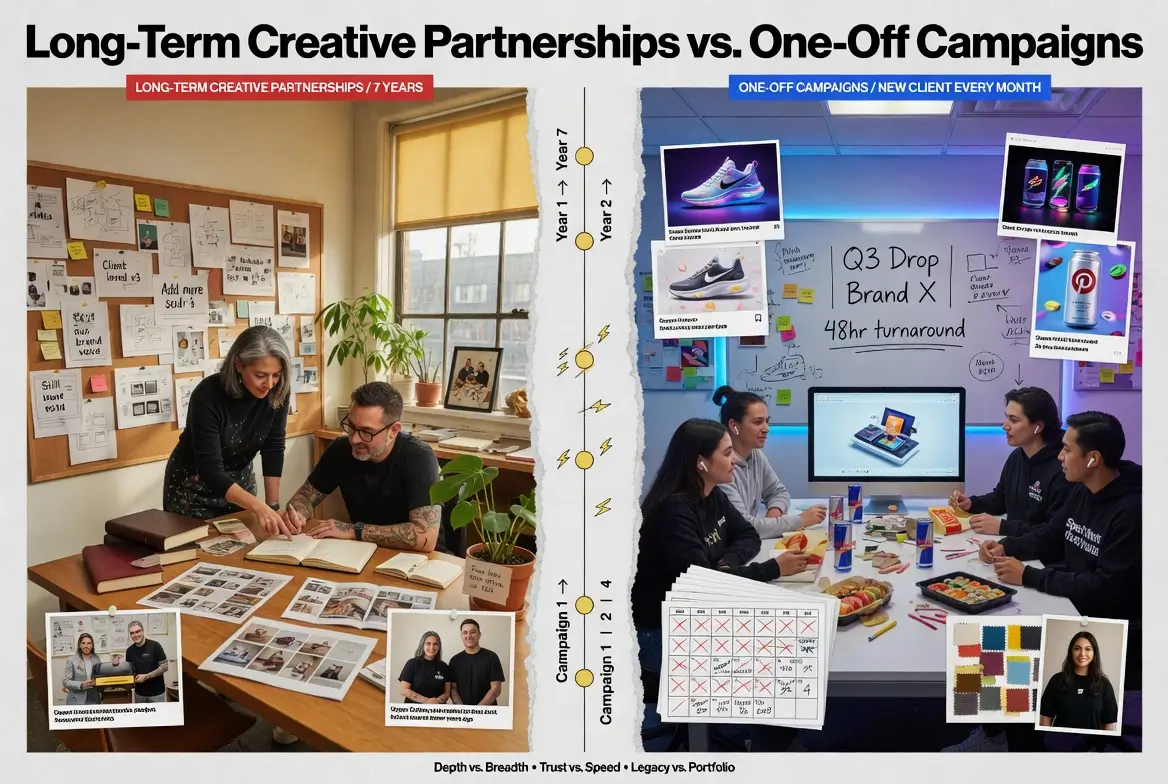
Les creative marketing strategies strategic strategies balance ad hoc campaigns with sustained relationships. By default, many brands opt for one-off sponsored posts because they seem to be effective, one negotiation, one deliverable, one payment. This approach wastes significant leverage. Creators who collaborate with your brand repeatedly develop deeper product knowledge, authentic advocacy, and progressively more natural messaging. Their audiences perceive authentic enthusiasm versus transactional relationships, increasing credibility and conversion. Long-term partnerships also reduce negotiation overhead and create predictable content rates that audiences are beginning to expect and anticipate.
La creative marketing strategy Optimal maintains a portfolio of relationship types: main partnerships lasting 6-12 months, seasonal campaigns with key creators aligned with specific product launches or seasons, and occasional opportunistic partnerships with high-performance creators with whom you have not yet partnered. Core partnerships account for 40-50% of your budget, providing stability and predictable output. Seasonal campaigns capture 30-40% of the budget, concentrating resources during peak business periods. Opportunistic partnerships represent 10-20%, maintaining the flexibility to capitalize on unexpected creative opportunities or emerging platforms. This portfolio approach balances relationship efficiency gains with the flexibility to test new creators and respond to market changes.
- Main partnerships : Engage over 6-12 months with 8-12 creators across key audience segments
- Seasonal campaigns : Focus spending during peak sales periods (vacations, season launches)
- Opportunistic deals : Set aside 10-20% of the budget for emerging creators and platform testing
- Regular communication : Monthly strategy calls with key partners to refine the message and format
- Performance feedback loops : Share analytics with creators, allowing them to optimize future content
Long-Term Creative Partnerships vs. One-Off Campaigns
Measuring the Performance of the Creative Marketing Strategy
One creative marketing strategy lacking a clear measure becomes a center of expenditure rather than an investment. Effective measurement requires establishing basic KPIs before the campaign is launched, tracking performance consistently, and attributing business results to creative partnerships. The measurement challenge is intensified through upper-funnel awareness campaigns where attribution is more difficult. However, even awareness campaigns deserve measurement through brand lift studies, voice analysis, and audience reach quantification. Your creative marketing strategy should specify what metrics matter for each type of campaign, setting realistic benchmarks based on the creator tier, audience size, and content format.
Vanity metrics like impressions and reach matter less than engaged audience and business results. A creator with 100K followers posting to really interested followers generates more value than a creator with 1M disengaged followers. Les creative marketing strategies Effective ones prioritize engagement rate, conversion rate, and brand lift over follower counts and reach. Beyond direct performance metrics, qualitative measurement also matters, analyze the feeling of comments, the context of brand mention, and the conclusions of the creative content audience. A campaign generating 500 comments discussing the characteristics of your product delivers more strategic value than the passive consumption of a campaign with a wider scope. Sleeq's approach integrates quantitative performance metrics with qualitative analysis, capturing both what audiences are saying about campaigns and how they are performing commercially.
Attribution frameworks build a bridge between measurement and decision making. For awareness campaigns, measure incrementality through control groups, compare brand metrics in markets where creators posted versus control markets without creative content. For consideration campaigns, track click-through rates, landing page traffic, and time on site from creator partnerships. For conversion campaigns, measure CPA, conversion rate, and customer lifetime value attributed to creative referrals. Integrate this measurement infrastructure into your planning creative marketing strategy, establishing data collection and analysis processes prior to the launch of the campaign. This discipline transforms marketing that creates an experimental expense into a main revenue generator with predictable returns.
Platform Strategy: TikTok, Instagram, YouTube, and Emerging Channels
Your creative marketing strategy must take into account the distinct creative ecosystems across platforms. Each platform features different creator types, audience demographics, content formats, and business models. TikTok creators thrive on entertaining and trend-driven content, reaching younger demographics with the format's rapid innovation. Instagram creators excel at lifestyle positioning and aesthetic storytelling, engaging older demographics with longer attention spans. YouTube creators build authority through long-form educational content, generating sustained engagement and deeper audience relationships. Emerging platforms like Threads, Bluesky, and platform-agnostic creators (building audiences across multiple channels) add complexity but also opportunities.
Les creative marketing strategies Sophisticated companies are developing platform-specific approaches rather than deploying identical content across channels. A creator collaborating with your brand should produce content native to the platform, TikTok trends for TikTok, Instagram Stories for Instagram, long-form YouTube for YouTube, rather than reusing the same videos. Audiences perceive authentic adoption of the platform versus reused content, significantly impacting engagement. Additionally, platform algorithms reward platform-native content; a TikTok video cross-posted to Instagram generates lower performance on Instagram compared to native Instagram content. Your creative marketing strategy should allocate different creator budgets across platforms based on audience demographics, product category alignment, and strategic business goals. E-commerce brands can prioritize TikTok and Instagram for reach and conversion. B2B software companies can focus on LinkedIn creators and educational YouTube creators. Financial services brands could emphasize long-form YouTube analysis and leadership thinking positioning.

- Platform ecosystem analysis : Map creator demographics, content formats, and audience behavior by platform
- Canal-specific briefs : Develop platform-native content guidelines rather than one-size-fits-all approaches
- Creative specialization : Partner with creators who demonstrate strong platform-specific performance, not just follower accounts
- Format experimentation : Allocate 10-20% of the budget to test emerging formats and platforms
- Trend monitoring : Maintain real-time awareness of the sounds, formats, and creative innovations that are trending
Avoid Cannibalization and Maintain Brand Authenticity
Like the creative marketing strategies are scaling up, the risk of cannibalization is increasing. When brands partner with multiple creators in the same niche simultaneously, their messaging can become repetitive, audiences get tired of the story, and individual creative content performs worse. Maintaining brand authenticity while scaling creative partnerships requires intentional audience mapping and creative variation. Instead of giving the same brief to 10 creators, develop several key message pillars, assigning creative partners to different pillars. This approach maintains consistent brand positioning while delivering varied content that prevents audience fatigue.
Preserving authenticity is progressively important in creative partnerships. Audiences are developing sophisticated abilities to distinguish authentic creative enthusiasm from manufactured approvals. A creator suddenly promoting your product after three years of never mentioning your category risks an audience backlash, followers perceive the partnership as purely transactional. Les creative marketing strategies effective partner with creators who are already interested in your category, whose audiences expect product recommendations. This alignment between creative passion and audience expectations generates a perception of authentic partnership. Plus, give creators meaningful creative freedom; audiences recognize when creators are producing authentic content versus when they're reading brand scripts. The optimal approach balances brand messaging requirements with creators' creative autonomy, allowing creators to integrate your brand naturally into their existing narrative style.
Technology and Tools for Executing a Creative Marketing Strategy
Les creative marketing strategies Modern technology is harnessing specialized technology through creative discovery, relationship management, performance measurement, and collaboration. Creator discovery platforms (HubSpot, AspireIQ, Klear, Upfluence) maintain creator databases with audience analytics, allowing for the effective identification of aligned creators. Relationship management platforms streamline contract negotiation, payment processing, and content approval workflows. Performance measurement tools integrate with native social platform analytics, aggregating campaign data for multi-creator campaigns. Collaboration platforms (Slack, Notion, Frame.io) facilitate communication and asset management across creators and internal teams. Your creative marketing strategy should incorporate the appropriate tools aligned with your campaign scale and organizational complexity.

Don't assume that technology is a substitute for strategic thinking. Les creative marketing strategies The most effective combine analytical tools with human judgment. Data identifies promising creators; relationship management confirms that they genuinely care about your brand. Technology measures performance; human analysis interprets causality and optimizes strategy. Invest in platforms that reduce administrative overheads, allowing your team to focus on developing strategic relationships instead of managing logistics. Additionally, platforms supporting creator communities (Patreon, Gumroad, Discord) help you maintain direct relationships with creators, reducing dependence on social platform algorithms, and allowing for sustained partnerships even if platform creator followings fluctuate.
Budget Allocation and ROI Framework for Creative Marketing Strategy
Strategic budget allocation separates creative marketing strategies successful wasteful spending. An effective framework allocates the budget through third party creators (macro, mid, micro), partnership models (UGC, sponsored, ambassadors, co-creation), and campaign types (awareness, consideration, co-creation), and campaign types (awareness, consideration, conversion). Macro creators with 500K+ followers generate reach but carry higher costs and less niche targeting. Micro creators with 10K-100K followers deliver superior engagement, niche audience alignment, and cost efficiency. The optimal allocation typically skew 60% to mid and micro creators (where engagement and conversion performance outperform macro creators proportionally) and 40% to macro creators for top-of-funnel reach. In this structure, allocate the budget through the types of partnerships based on strategic goals, UGC for conversion, sponsored content for awareness, co-creation for premium positioning.
The ROI calculation for creative marketing strategies varies by campaign objective. Awareness campaigns measured via the brand lift could deliver ROI via improved top-of-funnel metrics, justifying the direct attribution of lower sales. Conversion campaigns should track the cost of customer acquisition, allowing direct comparison to other marketing channels. One creative marketing strategy Sustainable maintains the benchmarks against alternative channels, if creative marketing delivers customer acquisition at 30 euros versus 50 euros for search advertising, allocate incrementally to creative partnerships. Additionally, factor the benefits of brand-building beyond the direct conversion. A creative partnership that builds brand affinity with target audiences delivers value beyond the immediate sale, reducing long-term customer acquisition costs and increasing customer lifetime value.
Frequently Asked Questions about Creative Marketing Strategy
How do I identify creators aligned with my brand for my creative marketing strategy?
Alignment requires analyzing audience demographics and psychographics. Start by defining your target customer profile, age, income, interests, buying behaviors, values. Next, identify 5-10 creators who genuinely serve this audience and demonstrate genuine interest in your product category. Use analytics platforms that look at engagement quality, audience composition, and sentiment analysis. The strongest indicators of alignment are creators who discuss independently of your category, whose audience feedback suggests relevant purchase intent, and whose past partnerships demonstrate authentic product integration rather than generic approvals. Interview prospective partners about audience perception and content philosophy. Strong alignment typically comes from conversations rather than data alone; creators should articulate how your brand fits naturally into their content story.
How much budget should I allocate to creative marketing versus other channels?
Budget allocation depends on your business model, customer acquisition landscape, and strategic goals. Most mature brands allocate 10-25% of the marketing budget to creative partnerships, integrating with social paid, research, and organic efforts. High-growth e-commerce brands often allocate 20-35% to creative marketing due to superior conversion performance. B2B companies typically allocate lower percentages (5-15%) reflecting longer sales cycles and audience concentration on professional platforms. Start by calculating the cost of acquisition across existing channels, then test creative marketing investments proportionally. If the creator CAC falls 20-30% below your current average, increase the allocation. Track brand awareness contribution, consideration, and conversion across multiple campaigns before establishing your optimal allocation percentage.
How long should I commit to creative partnerships in my marketing strategy?
The optimal partnership length depends on campaign goals and creative specialization. Focus conversion campaigns typically last 3-6 months, allowing for consistent messaging and audience familiarization. Awareness-raising and brand-building campaigns benefit from 6-12 month commitments, allowing the construction of sustained impressions and the deepening of the relationship. Brand ambassador programs often extend to 12+ months, establishing the long-term brand association. However, evaluate partnerships regularly, strong performers should receive continued investment and extended reach, while underperforming partnerships should close on schedule. Build regular check-ins (monthly for main partnerships, quarterly for secondary partnerships) evaluating performance against KPIs, creative evolution, and audience response. Use this data to decide whether to renew, extend, or enter into partnerships.
How do I measure the success of the creative marketing strategy beyond vanity metrics?
Go beyond impressions and reach by establishing business outcome metrics. For awareness campaigns, track the brand lift via surveys or control group methodology comparing brand metrics in markets with versus without creative content. For consideration campaigns, measure the quality of engagement (feedback feedback, saves, shares), landing page traffic, and time on site based on the link creators. For conversion campaigns, track CPA, conversion rate, repeat purchase rate, and customer lifetime value attributed to creative referrals. Plus, track brand health metrics, sentiment analysis of creative content and audience feedback, voice discussions, and brand association evolution. Aggregate performance across creators, identifying the top 20% performers who deliver disproportionate value. Reallocate the budget to high performers, discontinuing low-performing partnerships. This discipline transforms marketing that creates an experimental expense into a main revenue generator with predictable returns.
How do I ensure that creators maintain the authentic voice by representing my brand?
Authenticity arises by aligning creative passion with brand values and then by granting creative autonomy. Partner with creators who are genuinely interested in your product category; their existing audience expects category recommendations. Develop brief guidelines that establish core brand messages and product information requirements, then allow creators to integrate your brand through their authentic voice. Request multiple versions of content for creative feedback before final approval, and this collaborative process often enhances the naturalness of the messaging. Share performance data with creators; explaining what messages and formats resonate with their audiences allows them to optimize future content while maintaining authenticity. Also, avoid over-scripting; the most authentic creative content sounds conversational rather than corporate. Entrust the creative understanding of their audiences; they typically recognize messaging better than brand teams. Balancing creative freedom with brand surveillance produces authentic content that audiences trust while maintaining brand safety.
What are the biggest mistakes brands make when developing creative marketing strategies?
Common mistakes include: (1) Prioritizing follower accounts over audience quality and engagement, a creator with 50K engaged followers outperforms one with 500K disengaged followers; (2) Treating creative partnerships in a transactional way rather than a relational way, one-time posts underperform sustained partnerships by 40-60%; (3) Deploying the same briefs across creators rather than allowing creative variation, audiences are get tired of repetitive messaging; (4) Lack measurement frameworks clear, spending without understanding ROI prevents optimization and strategic learning; (5) Partner with creators who are misaligned due to availability or costs rather than audience adjustment, cheap partnerships that deliver poor results waste the budget and damage brand perception; (6) Over-scripting creative content, audiences recognize forced messaging, reducing engagement and authenticity. Avoid these mistakes by prioritizing audience alignment, building sustained relationships, allowing creative autonomy, establishing measurement early in the campaign, and treating creative marketing strategically rather than tactically.
Implement Your Creative Marketing Strategy in 2026
Building a creative marketing strategy sustainable requires going beyond tactical creative partnerships towards the development of the strategic framework. Your approach should incorporate audience understanding, creative relationship development, content co-creation, and rigorous performance measurement. Start by defining business goals, which customer segments are driving growth forward? What gaps in awareness or consideration are limiting your market expansion? What conversion optimizations would increase revenue? Then, map creative marketing to these goals, identifying which creators are genuinely reaching your target audiences and which partnership models align with your goals.
The most successful brands approach creative marketing strategies as content production systems rather than as media buying exercises. Sleeq's approach treats each brand like a content creator, enabling strategy through authentic creative partnerships that generate the 10M+ views and measurable business impact that modern brands demand. Instead of asking “what creators should we pay for posts?” , ask “what creators can help us tell our brand story in an authentic way to our target audiences?” ”. This narrative reframing attracts creators who are genuinely excited about partnerships, improving content quality, audience reception, and business results. Your creative marketing strategy is expected to evolve continuously based on performance data, creative feedback, and platform innovation, the creative landscape is changing rapidly, and static strategies become ineffective within a few months.
Key Points to Remember: An effective creative marketing strategy integrates audience mapping, creative alignment, partnership structures, and rigorous measurement. Moving from one-time sponsored posts to sustained creator partnerships increases engagement by 40-60%, while allocating the budget through third-party creators maximizes reach and conversion. With the creator economy exceeding $250 billion globally, brands that master authentic creative partnerships capture a disproportionate market share in 2026 and beyond.






.avif)