
Brand launch strategy: the step-by-step guide for new markets
Plan a winning brand launch strategy with this actionable guide. Market research, positioning, channels and calendar by Sleeq.
April 24, 2026
One brand launch strategy determines whether your market entry is successful or unsuccessful. Chez Sleeq, we've supported 300+ brand launches across Europe, and we know that brand launch strategy goes well beyond a single campaign moment. According to CB Insights, 90% of startups fail, and 42% of these failures come from the lack of market need, not product defects. Your brand launch strategy must validate demand, build awareness, and establish positioning before competitors even notice. This guide takes you through pre-launch research, positioning architecture, positioning architecture, channel selection, launch phases, budget allocation, and measurement frameworks that drive sustainable growth. Whether you are entering the European market or scaling to new regions, a brand launch strategy structured reduces risks, accelerates customer acquisition, and creates a dynamic that is composed. Learn the playbook of brand launch strategy that transforms visibility into loyalty.
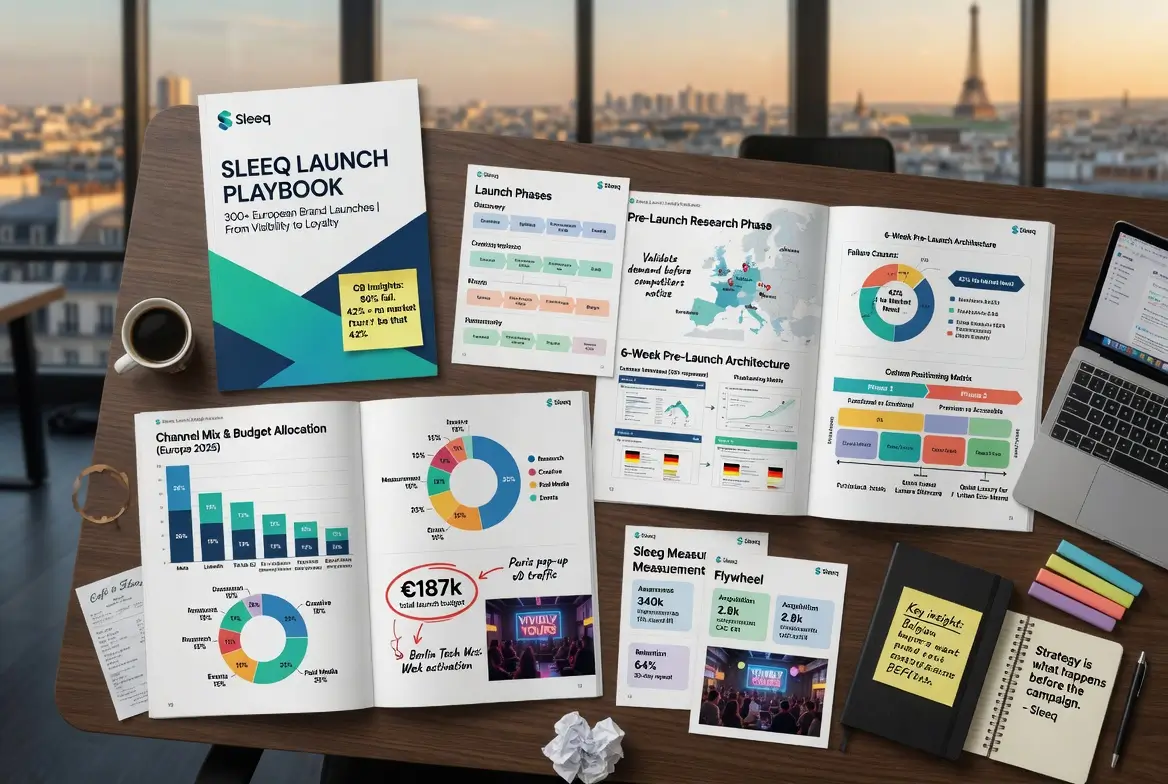
The difference between a brand launch that is stagnant and one that explodes is based on preparation. Most teams spend 80% of the effort on launch day and 20% on foundation construction, the ratio should be reversed. One brand launch strategy Winner invests heavily in market research, consumer insights, and clear positioning before the paid first impression takes place. We anchor this orientation in the dynamics of the European market, where language, regulation, and cultural nuances require precision. From the social-first methodology of Sleeq who helped Fitness Park gain 500K followers in 12 weeks, to the influencer partnerships that sowed awareness before the launch of paid media, we refined what works. This framework of brand launch strategy applies to SaaS, consumer goods, fintech, lifestyle, and enterprise brands entering new markets.
Your success is based on five pillars: depth of research, clarity of positioning, channel selectivity, orchestrated timing, and ruthless measurement. This playbook arms you with the data, templates, and decision frameworks to confidently execute each pillar.
Pre-Launch Research: Validate the Request Before Building
The foundation of all brand launch strategy is market research that eliminates guesswork. Before positioning, before channels, before creative, you need to answer three questions: Is there a market? Who is winning? And can you compete? Research directly prevents the 42% failure rate linked to market adjustment blindness. Start with the Market sizing : Define your total addressable market (TAM) in your target geography, segment it by persona and use cases, and project revenue potential over three years. Secondary research by industry analysts (Gartner, IDC, Forrester) provides the baselines; primary research via LinkedIn surveys, interviews, and discussions anchors insights into real behavior. Then, conduct a competitor analysis covering direct rivals, adjacent players, and white space opportunities. Map their positioning, messaging, pricing, channel mix, customer ratings, and growth trajectory. Tools like Semrush, Ahrefs, and Crunchbase speed that up, but direct sales conversations and customer interviews reveal a deeper truth about what competitors are missing out on.
Les consumer personas transcend demographic sketches. Build behavioral profiles: what problems are they experiencing today? What solutions did they try? What criteria drive purchasing decisions? Where do they consume content, and who influences them? European markets show distinct persona patterns, German corporate buyers prioritize efficiency and ROI; French consumers value design and brand heritage; UK tech audiences follow leading thinkers and community forums. Interview 20-30 target customers in each region to discover these distinctions. Document the jobs-to-be-done (JTBD) language directly from interviews; use their words in positioning and messaging. Finally, assess your competitive differentiation : What can you claim that competitors can't? It's rarely “better,” it's different in a way that your persona values. Airbnb didn't defeat hotels on price; it won on authenticity and the local experience. Your research should crystallize your unique angle before spending a euro on marketing.
- Conduct 3-5 customer discovery interviews per persona to validate the JTBD and the positioning angle.
- Map competitor positioning, pricing, and growth channels to identify white space opportunities.
- Quantify TAM and segment by geography, persona, and use case to forecast revenue and prioritize launch regions.
- Test the positioning angle with 50+ respondents before you commit to the brand creator and the messaging framework.
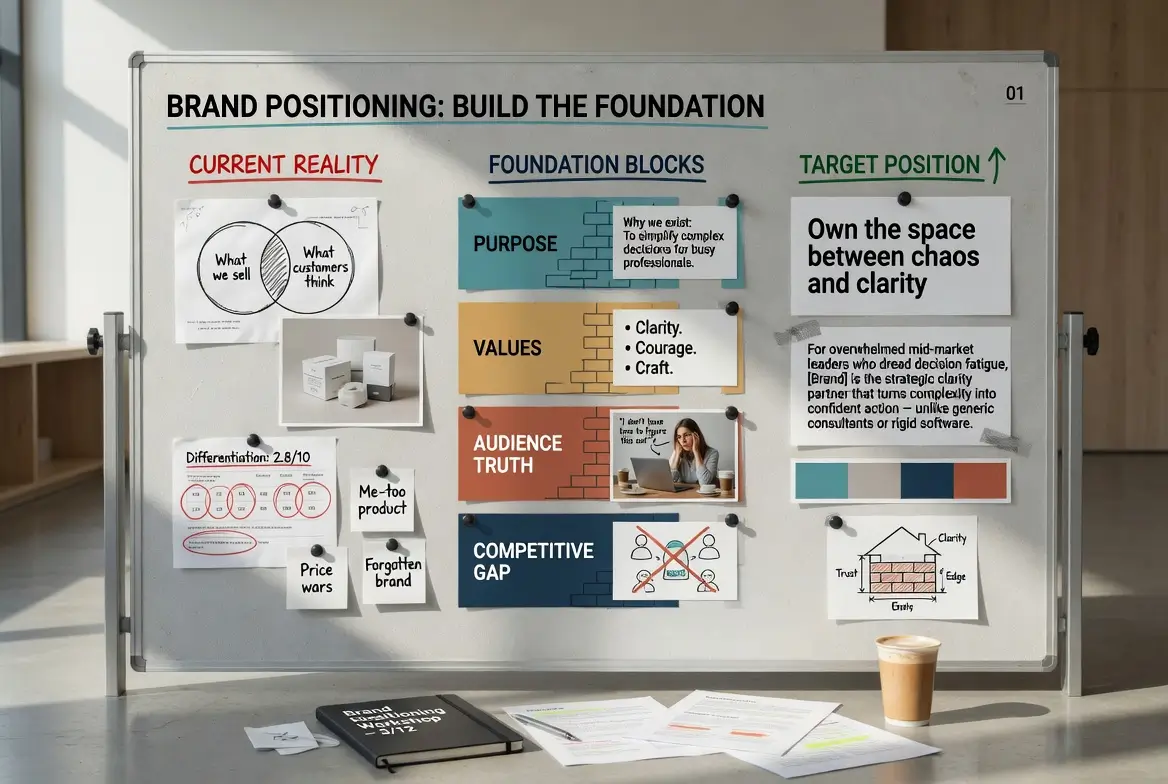
Brand Positioning: Build the Fortress Your Launch Is Built On
Positioning is the real mental space that your brand occupies in your customer's mind, and it should be crystal-clear from day one of your brand launch strategy. Unclear positioning leads to scattered messaging, inefficient spending, and poor differentiation in congested markets. Your positioning framework includes five elements: **target customer** (specific, not “everyone”), **customer problem** (the work they're trying to do), **solution claim** (your specific approach), **proof of support** (data, founder story, or social proof), and **emotional benefit** (how success makes them feel). Stripe has positioned itself as the “economic infrastructure of the Internet”, specific, problem-oriented, and aspirational. When you announce your brand launch strategy, your positioning statement should be completed in one sentence: “For [customer], [our brand] is [category] that [unique claim] because [proof].”
THEvisual identity amplifies positioning through color, typography, imagery, and the design system. Your visual identity should work across the web, social, print, and out-of-home, especially crucial for European markets where design sophistication sets expectations. Allocate 5-15% of your pre-launch budget to a brand designer who can translate positioning into a cohesive identity. The messaging architecture extends positioning into key narratives: your value proposition (what you do and why it matters), proof narratives (customer stories, data, founder journey), and emotional narratives (brand values, vision, community), and emotional narratives (brand values, vision, community). Document 5-8 key messages that your team can weave across channels, ensuring consistency from day one. Messaging guidelines prevent the dilution that occurs when multiple teams are active without safeguards. Your brand launch strategy gains in power when each touchpoint, social post, PR article, email, paid ad, reinforces the same positioning.
- Define positioning in five elements: target, problem, solution, solution, proof, emotion.
- Design the visual identity that reflects the positioning and works across all channels (web, social, OOH, print).
- Build the messaging architecture with 5-8 key narratives rooted in positioning and proof.
- Create email guidelines that allow teams to activate consistently across channels.
Channel Strategy: Go Social-First, Seed with Influence
Your channel mix of brand launch strategy depends on where your persona is spending attention and what channels are effectively accelerating awareness. The era of broadcast-first launches (TV, outdoor, PR) has moved on, data shows that social-first brands are growing 3x faster than traditional-first brands, according to research by Sprout Social. For most consumer and B2B SaaS launches in 2026, your channel hierarchy should be: **social media** (proprietary audience, organic reach, community building), **influencer seeding** (credibility transfer, niche reach, authentic approval), **paid social** (audience acceleration, targeting accuracy), **content/PR** (leadership thinking, SEO, earned media), and **partnerships** (distribution lever, customer acquisition). It's not rigid, your specific mix depends on your persona and market. A B2B fintech brand could weigh heavily on LinkedIn and analyst relationships; a DTC beauty brand leads with TikTok and micro-influencer seeding.
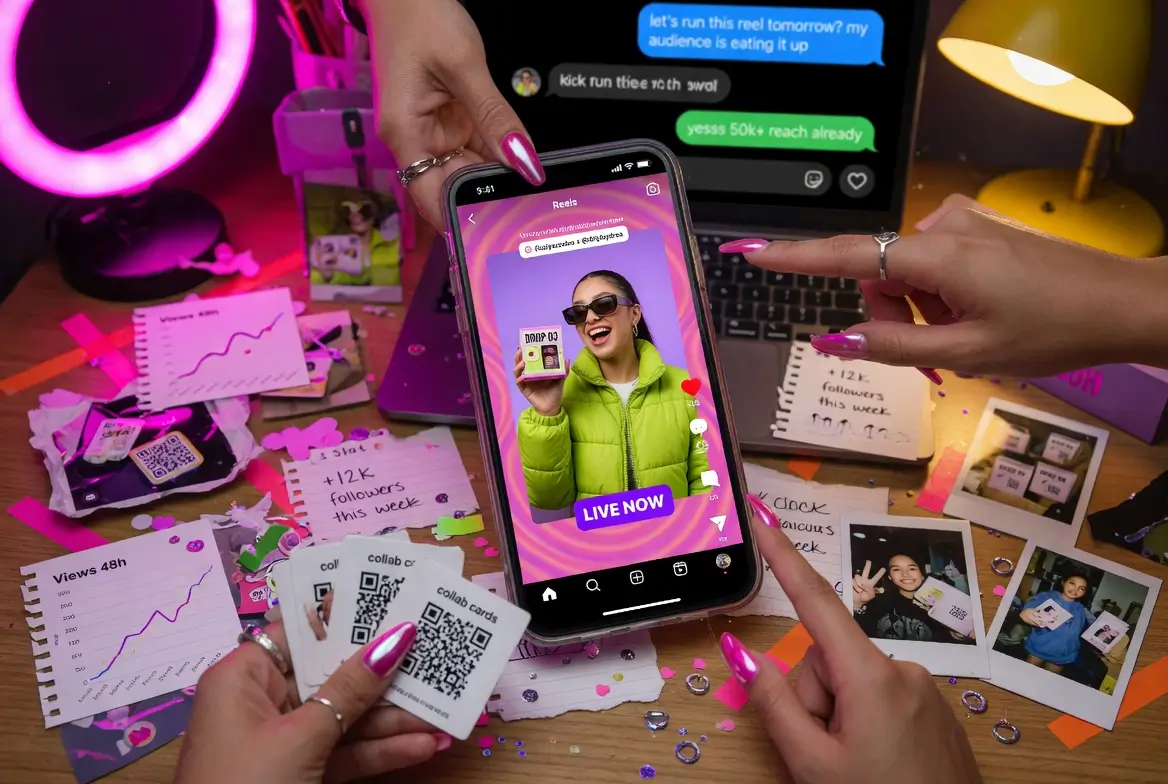
THESocial-first activation means launching accounts, building organic content systems, and activating the community before paying for it. Why? The advantage of first-mover over platform growth rates, accounts that gain followers organically before paid campaigns have higher engagement and lower cost-per-action. Second, algorithm-friendly platforms reward authentic engagement; a community-first account executes paid campaigns at 30-50% lower cost-per-click than a sterile corporate account. Third, founder/team credibility, personal founder accounts, and team narratives humanize your brand and attract talent and advocates. Start 2-3 months before your public launch by seeding content pillars: educational (tips, frameworks, how-tos), narrative (founder story, behind-the-scenes, customer stories), and conversational (community engagement, questions, industry commentary), and conversational (community engagement, questions, industry commentary). Use data from these organic foundations to refine messaging before paid campaigns launch.
THEinfluencer seeding reduced customer acquisition costs by 30-50% compared to cold paid media, according to research by the Influencer Marketing Hub. Instead of celebrity mega-influencers, prioritize mid-tier (10K-100K followers) and micro-influencers (1K-10K) in your niche who have authentic audiences and high engagement. Seed them with a product, positioning clarity, and optional payment, but let them tell the story in their own voice. The authenticity of a micro-influencer's recommendation goes beyond the scope of celebrity endorsement to drive conversions. Map influencers across three tiers: (1) **brand ambassadors** (deep relationship, ongoing partnership), (2) **campaign partners** (2-3 product seeding and content collaborations), (3) **community activists** (active users who share organically). A structured seed campaign should attract 20-30 organic mentions across influencers in the 2-3 weeks prior to your paid launch, and this earned social proof becomes proof of demand when your paid campaigns activate.
- Activate organic social media 8-12 weeks before launch to build the follower base, test messaging, and establish the usability algorithm.
- Seed 20-30 micro and mid-tier influencers in your niche 4-6 weeks before launch; let them tell the story in an authentic way.
- Weighten social media and influencer channels to 50% + of the awareness budget in your first 90 days.
- Build the founder's personal brand in parallel, and it reduces customer acquisition costs by 15-25%.
Launch Phases: From Stealth to Support
One brand launch strategy The winner unfolds through three distinct phases, each with unique goals, channels, and KPIs. Confusing these phases into a launch “moment” wastes money and dilutes the impact. The soft launch (weeks 1-4) activates the hottest audiences: existing customers (if expansion), industry insiders, early-adopters communities, and seeded influencers. Soft launch goals are validating and building credibility, not maximizing reach. Traffic targets could be 5-10K users; email list growth 500-1K; social followers 2-5K. The channels focus on organic social media, direct outreach, PR targeting (analyst briefings, journalist insights, niche posts), and paid campaigns on a modest scale. Budget allocation: 30% organic/earned, 40% paid social, 20% influencer/partnerships, 10% content/PR. Soft launch generates early customer stories, refines messaging, identifies messaging gaps, and builds momentum before the “hero moment.”
The Launch hero (weeks 5-8) is your coordinated, high-volume moment: press release, launch event (physical or virtual), coordinated influencer mentions, increased paid media, and founder/team visibility. The goals of the hero launch are maximum awareness, customer acquisition, and media coverage. Targets escalate 5-10x: 50-100K users, 5-10K email signups, 20-50K social followers. This phase lasts 2-4 weeks and concentrates 60% of your launch budget. The channels include everything available: paid social escalated across platforms, search marketing (brand terms, adjacent keywords), PR and media won, email campaigns with heated audiences, content assets (case studies, webinars, reports), and amplified influencer content. Timing matters, coordinate PR, influencer mentions, paid activation, and founder visibility within a 3-5 day window to create maximum momentum. A staggered launch dilutes the impact; concentration amplifies the signal.
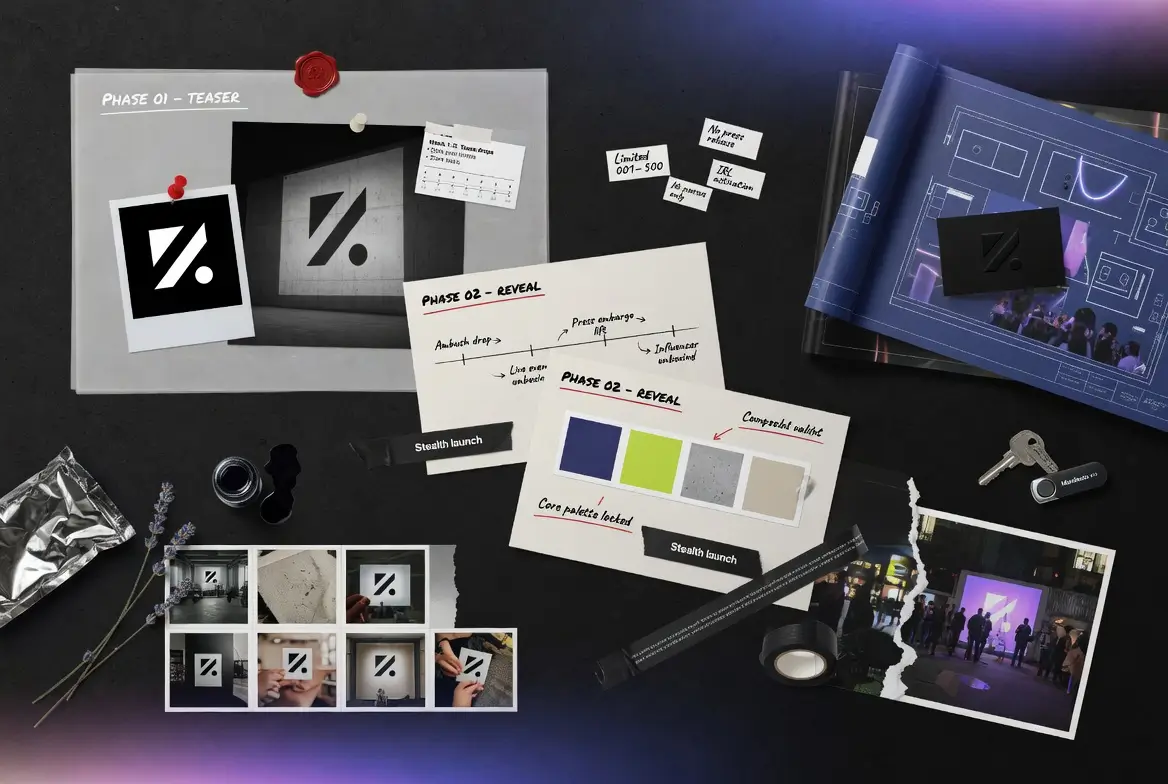
La support phase (weeks 9+) transits to long-term customer acquisition and brand building. The expense of launching heroes drops 40-60%; you go from awareness to conversion and retention. The supporting goals are profitable customer acquisition, community deepening, and organic growth. The channels are rebalancing: organic social media (content, community), content marketing (content, community), content marketing (SEO, leadership thinking), customer marketing (referrals, case studies), partnerships, and paid spending measured on the highest-ROI channels. Budget allocation: 50% organic/community, 20% content/SEO, 15% paid (focus performance), 10% partnerships, 5% PR/brand. A common mistake kills the momentum after launching heroes by cutting the budget too quickly. Support does not mean maintenance, and that means rebalancing towards profitability while keeping acquisition efficient. Most successful brands find their CAC (customer acquisition cost) lasting between weeks 16-24, after iterating on messaging, creative, targeting, and funnel conversion. Agile measurement and optimization define this phase.
- Soft launch (weeks 1-4): Hot audiences, validation, credibility. Budget: 20% of the launch total.
- Hero launch (weeks 5-8): Coordinated increase, maximum awareness, 60% of the launch budget.
- Support phase (weeks 9+): Long-term acquisition, focus on efficiency, transition to organic channels and performance.
- Measure each phase separately to identify which activities and channels drive the best CAC and LTV.
Budget Allocation Framework: Where the Money Goes
A typical budget of brand launch strategy for entering the European market varies from 50K euros (bootstrapped, heavy-organic) to 500K+ euros (aggressive, all channels). Regardless of the total size, the allocation principles remain constant. The allocation framework divides the budget across five categories: **research and planning** (8-12%), **brand development** (5-10%), **paid media** (40-50%), **content and partnerships** (15-20%), and **measurement and optimization** (5-8%). In paid media, sub-allocate such as: social media platforms (50%), research (20%), display/video (20%), influencer partnerships (10%). In content and partnerships: influencer seeding (40%), PR and communications (30%), content creation (20%), partnership development (10%). These percentages differ based on your position and market, as an established brand entering a new geography could allocate less to brand development and more to paying. An unknown startup in a competitive niche could allocate 70% to the payer and influencer to accelerate credibility.
An example of a budget of 200K euros over 12 weeks is broken down as: research/positioning 15K euros, brand identity 12K euros, paid social 90K euros (soft: 20K euros, hero: 54K euros, support: 16K euros, support: 16K euros), content/PR 25K euros), content/PR 25K euros, content/PR 25K euros, influencer seeding 35K euros, measuring/optimization 8K euros, contingency 10K euros. This allocation assumes a social-first, heavy-influencer strategy targeting consumer or B2B SaaS audiences in a growth market. Adjust for maturity: a fintech brand launching on enterprise buyers in Germany would increase PR/analyst relationships (40K euros) and reduce the influencer (20K euros). A DTC fashion brand launching through Instagram and TikTok in France would increase the influencer (50K euros) and social paid (120K euros). The key is discipline: lock in your allocation framework before launch, measure reals against, and rebalance based solely on performance data, not gut-feel. Most teams underinvest in research (7% vs 12%) and over-invest in execution (58% vs 50%), leading to weak positioning and wasted media spend.
- Allocate 8-12% to research and positioning before you commit to creativity or media spending.
- Divide the paid media budget: 50% social, 20% search, 20% display/video, 10% influencer (adjust by target audience).
- Focus 60% of the paid budget in 5-8 weeks (hero launch phase) for maximum impact.
- Set aside 5-8% for measurement, analytics, and mid-race optimization during the launch window.
FAQ: Brand Launch Strategy Essentials
What is the biggest mistake in brand launch strategy?
Confusing execution with strategy. Teams build impressive landing pages, execute ads, activate influencers, but without clear positioning, they broadcast the noise, not the signal. The 42% of startups that fail due to “no market need” didn't skip execution; they skipped research. Validate the request, clarify the positioning, and test the messaging with 50+ prospects before spending on paid media. The time invested in research reduces the launch budget by 20-30% because the spend targets the right people with the right message.
How long should a start-up brand launch with market impact take?
Research and positioning: 6-8 weeks. Brand development: 3-4 weeks. Soft launch: 4 weeks. Hero launch: 4 weeks. Total: 17-20 weeks from kickoff to measurable market traction. Compressed calendars (8-12 weeks) are possible if the positioning is clear and teams are moving decisively, but they require more pre-phase clarity and fewer layers of approval. Typical enterprise launches take 24-32 weeks due to approval processes; lean startups compress to 12-16 weeks. The quality of research and positioning is more important than speed; accelerating these phases costs 2-3x more in wasted media expenditure than winning 4 weeks in the market.
Should you launch in one geography or in several simultaneously?
Start with a primary geography where you have the most profound product-market-fit signal and the strongest team presence. Successful soft and hero launches in a market generate case studies, evidence, and operational learnings that accelerate subsequent markets. Sequential launches (market A weeks 1-12, market B weeks 13-24) are operationally cleaner and cheaper financially than parallel launches. However, if you have separate teams or funding by geography, parallel launches in 2-3 similar markets (e.g. UK and Germany) are viable. Simultaneous launches across 5+ countries with a team dilutes focus and wastes capital, avoid that.
How do you measure ROI on brand launch expenses?
ROI = (Customer Lifetime Value - Customer Acquisition Cost)/Customer Acquisition Cost. For a SaaS brand with 5 euros LTV and 1 euro CAC, the ROI is 5x (4 euros of profit per euro spent). Launch ROI is typically measured over 12-24 months when customers generate recurring revenue. In the short term (weeks 1-12), measure effectiveness metrics: CAC versus target, conversion rate by channel, and engagement rate trends. If the CAC is running at 2x the target in week 8, the launch underperforms, pause, analyze the messaging and audience alignment, and rebalance the expense. Most healthy launches hit the target CAC between weeks 16-24. Benchmark against your category: SaaS launches generally achieve 3-5x ROI; DTC consumer brands aim for 2-3x in 12 months.
What is the role of PR in a modern brand launch strategy?
PR is an accelerator of credibility, not a driver of awareness. During the soft launch (weeks 1-4), target niche publications, analyst briefings, and the focused media to build positioning credibility. During the hero launch (weeks 5-8), PR amplifies the official announcement through the major business media (TechCrunch, Business Insider, Financial Times). Press coverage carries 2-3x more weight than paid ads to drive trust and inbound leads, allocate 10-15% of the launch budget to PR. However, PR alone does not drive acquisition volume; it signals legitimacy that increases paid campaign effectiveness by 20-30%. Combine PR with the influencer and social paid for the full spectrum of credibility.
How do you maintain momentum after the hero-launch phase ends?
The support phase (weeks 9+) changes the focus from raising awareness once to component customer acquisition and brand building. Reduce the paid spend 40-50% of peak heroes; reallocate to organic content, community engagement, and partnerships that generate recurring customer flow. Activate customer advocacy: case studies, referral programs, and customer stories generate 30-50% of support phase leads while keeping CAC low. Continue with content marketing and SEO, these generate 15-25% of traffic weeks 9-24 at minimal marginal cost. Measure performance weeks 9+ separately; if CAC starts to rise above target, it signals email saturation or audience overlap, test new audience segments, creative angles, or channels. A well-orchestrated support phase maintains the hero launch dynamic without the expense of the hero phase.
Brand Launch Strategy in Action: Lessons from Entering the European Market
At Sleeq, we've guided 300+ brands through market entry across Europe, and patterns are emerging. The winning brands combine three elements: deep positioning clarity (they can articulate their differentiation in one sentence), thesocial-first execution (they activate organic channels and influencers before paid media), and ruthless measure (they adjust spending and messaging on a daily basis based on performance data). Our social-first methodology, which propelled Fitness Park's 500K followers gain in 12 weeks, works because it's in line with how audiences discover and trust brands in 2026. Rather than top-down broadcasting, it invites community participation and peer validation. A brand that seeded 30 micro-influencers 6 weeks before the launch saw 15% lower CAC during the launch hero than a brand running only paid media, the social proof gained transferred into the effectiveness of the paid campaign.
European markets require consistent localization. A focused UK positioning could accentuate pragmatism and humor; a German positioning accentuates efficiency and reliability; a French positioning accentuates design and craftsmanship. Your brand launch strategy should include regional positioning variants that remain true to the key positioning but resonate locally. We saw 20-30% efficiency gains in paid campaigns by testing region-specific messaging early (weeks -4 to -2) and escalating the winning variants during the soft and hero phases. Language is a proxy for culture; brands that invest in native-speaking copywriting see higher engagement and lower CAC than brands using English templates translated via Google.
The experience of Sleeq thru Activating social media, the influencer partnerships, and the brand content creation crystallized that the success of brand launch strategy is based on the alignment between positioning, channels, and audience truth. When these three align, you've genuinely positioned yourself at a real customer problem, picked the channels where those customers spend attention, and activated with proof of your differentiation, the launch dynamic becomes inevitable. Misalignment costs money: bad positioning + good channels = wasted reach; good positioning + bad channels = weak traction; good positioning + good channels but poor evidence = slow conversion. Our guide to go-to-market strategy in Europe And the advice for launching your brand in Europe deepen the regional context and the execution playbooks.
Building Your Brand Launch Execution Team
One brand launch strategy successful requires cross-functional coordination. The typical launch team structure includes: positioning lead/strategy (internal or agency), brand designer, content creator/copywriter, paid media specialist, influencer manager/partnership, lead PR, and analytics/measurement lead. For lean teams, one person could expand into two roles, but specialization matters, especially during the weeks of execution. The positioning lead (often a growth consultant or CMO) has the research, positioning, and messaging clarity that cascaded to all other functions. The brand designer translates positioning into visual identity and guidelines. Content creators operationalize messaging into social posts, videos, blog posts, and advertising copy. Paid media specialists manage budget allocation, audience targeting, and daily optimization. Influencer managers build and nurture relationships, coordinate seeding, and amplify content. PR leads secure media coverage and manage storytelling. Analytics specialists measure, report, and surface optimization opportunities. A team of 5-8 people full-time effectively executes a 200K+ euros launch; smaller budgets exploit agencies for specialized functions (positioning, design, media buying) and in-house for strategy, content, and execution. Start building your team 12-16 weeks before launch; onboarding and alignment take 4 weeks alone.
- Assign an owner to the positioning and strategy ; this role cascaded directives to all other functions.
- Hire or contract a brand designer early (week -12); visual identity takes 4-6 weeks for quality work.
- Staff paid media and analytics roles in week -8 ; they need 2-4 weeks to plan campaigns and build tracking before launch.
- Activate influencer relationships 8-10 weeks before launch ; relationship-building precedes seeding.
- Hold the weekly cross-functional syncs starting at week -8 to maintain alignment as activation approaches.
Next Steps: From Strategy to Execution
Your brand launch strategy starts with research, not execution. Schedule a 2-hour positioning workshop with internal stakeholders and a 1-hour customer discovery call with 3-5 target buyers. Clarify your writing positioning before touching the design or campaigns. Choose your launch geography based on product-market-fit signal, team strength, and market size (prioritize depth over scope). Outline your 12-week schedule in a shared project plan, assign owners to each phase, and commit to the budget. More importantly, lock down positioning and messaging at week -6; changes after that point ripple through all of the downstream work and delay activation.





.avif)