
How to create a brand in France: a complete guide for international businesses (2026)
Everything you need to know to launch and develop a brand in France. Market insights, regulations, consumer behavior, and social media strategy by Sleeq.
April 24, 2026
%20(1).webp)
Start a brand in France requires understanding a single market with specific regulations, distinct consumer preferences, and a particular digital landscape. France, the world's sixth largest economy with 68.5 million inhabitants and 78.8% urban population, represents a critical gateway for international businesses accessing Europe. Whether you are building a brand in France via e-commerce, retail or influencer partnerships, success depends on mastering local compliance, consumer behavior and social media strategies. Chez Sleeq, a creative social and influence agency based in Paris, we help international brands to access the European market on a daily basis through strategies of brand in France tried and tested. This guide covers everything you need to know to establish and grow your presence in this competitive but rewarding market.
Understanding the French market landscape for international brands
The French market presents both opportunities and challenges for international companies creating a brand in France. The French e-commerce sector generated 88.77 billion euros in 2025 and is expected to reach 97.69 billion euros in 2026, representing a robust compound annual growth rate of 10%. This expansion signals a strong demand for quality products and services, although competition remains fierce between established local and international players. Indeed, 79% of French consumers prefer products “Made in France”, indicating that local authenticity has a significant influence on purchasing decisions. Therefore, international brands need to differentiate themselves through superior value, innovation, or strategic positioning rather than relying solely on the original advantage.
When establishing a brand in France, it is essential to understand consumer behavior. French shoppers demonstrate a strong commitment to physical retail experiences, with 65% of consumers preferring traditional stores to make purchases. At the same time, 80% of French consumers trust local businesses much more than supermarkets, suggesting that personalization and localized customer relationships drive loyalty. E-commerce penetration, while growing, remains balanced with traditional retail preferences, which means that multi-channel strategies work better for businesses creating a brand in France.
- Market size: 97.69 billion euros in projected e-commerce revenue (2026)
- Population scope: 68.5 million consumers in urban centers
- Consumer preference: 79% prefer products made in France
- Confidence in local business: 80% trust small businesses more than supermarkets
- Growth trajectory: Annual expansion of e-commerce by 10%
Regulatory and legal requirements to create a brand in France
Navigating French regulations is inevitable when creating a brand in France. The Toubon Law, enacted in 1994, mandates that all advertising content and product information appear in French, regardless of the origin of your brand. This means that packaging, websites, contracts, and promotional materials must comply with French language requirements. Violating this regulation can lead to fines and market access restrictions, making legal compliance a fundamental step rather than an after-thought. In practice, many international brands establish partnerships with local agencies to ensure that their communication of brand in France respects linguistic and cultural standards.

Beyond language, businesses creating a brand in France must select appropriate business structures and obtain the necessary registrations. Two main structures dominate: the SARL (Limited Liability Company) for smaller operations and the SAS (Simplified Joint Stock Company) for growing businesses that require flexibility. Both require a SIRET (System of Identification of the Directory of Entities) registration with the French tax authorities, a mandatory identifier for all commercial activities. In addition, the ARPP (Professional Regulatory Authority for Advertising) must approve advertising campaigns before they are launched to ensure compliance with French consumer protection standards. For brands selling food, cosmetics, or health products, regulators like the ANSM (National Drug Safety Agency) add additional layers of compliance.
- Toubon law: French language is mandatory in all advertising content and materials produced
- Commercial registration: SIRET number required from the tax authorities
- Entity structure: Choose SARL (smaller) or SAS (growth-oriented)
- Advertising approval: ARPP certification required before campaign launch
- Sectoral rules: ANSM supervision for food, cosmetic and health products
Dominance of marketplaces and distribution channels in France
The distribution strategy is critical when creating a brand in France, and the marketplace landscape differs considerably from other European markets. Although Amazon leads globally, eight of the top ten French e-commerce platforms are local or specialty retailers, including Cdiscount, La Redoute, and the localized version of Zalando.fr. This indicates that French consumers show a strong loyalty to domestic e-commerce platforms, making omnichannel presence essential for businesses creating a brand in France. Therefore, successful market entry requires a presence on both global marketplaces and local platforms to maximize visibility and trust.
In other words, the choice of distribution partners should reflect the shopping habits of local consumers rather than replying the strategies of other European countries. Zalando.fr, although part of a German group, operates independently and has cultivated a thorough knowledge of the French market. Cdiscount, founded in 1998, commands particular loyalty among French online shoppers looking for competitive prices and fast delivery. La Redoute, a historical catalog retailer, maintains a significant influence in the decoration and fashion categories. For brands creating a brand in France, negotiating favorable conditions with these platforms significantly accelerates market penetration and brand visibility. Our experience with retail customers shows that combining marketplace presence with direct-to-consumer channels via social media creates the strongest competitive position.
- Marketplace leaders: Amazon No. 1, but Cdiscount, La Redoute and Zalando.fr command local loyalty
- Top 10 platforms: 80% are localized French or European players
- Consumer preference: Local platforms more reliable than international alternatives
- Distribution strategy: Essential multi-channel presence (marketplace + direct)
- Partnership priority: Negotiate favorable terms with leading platforms by category
Social media strategy and influencers for success on the French market
Social media is the fastest growing channel for businesses creating brand in France, with influencer partnerships that deliver measurable results. The data is convincing: 75% of subscribers make purchases based on recommendations from influencers, which means that the strategic selection of influencers directly impacts conversion rates and brand awareness. French consumers, especially generations Z and millennials, react strongly to authentic and locally relevant content that addresses their specific needs and values. At Sleeq, our campaigns with major brands such as Ritz Paris and Pathé France demonstrate that culturally adapted influencer strategies outperform generic European approaches by 3-4x on engagement metrics.
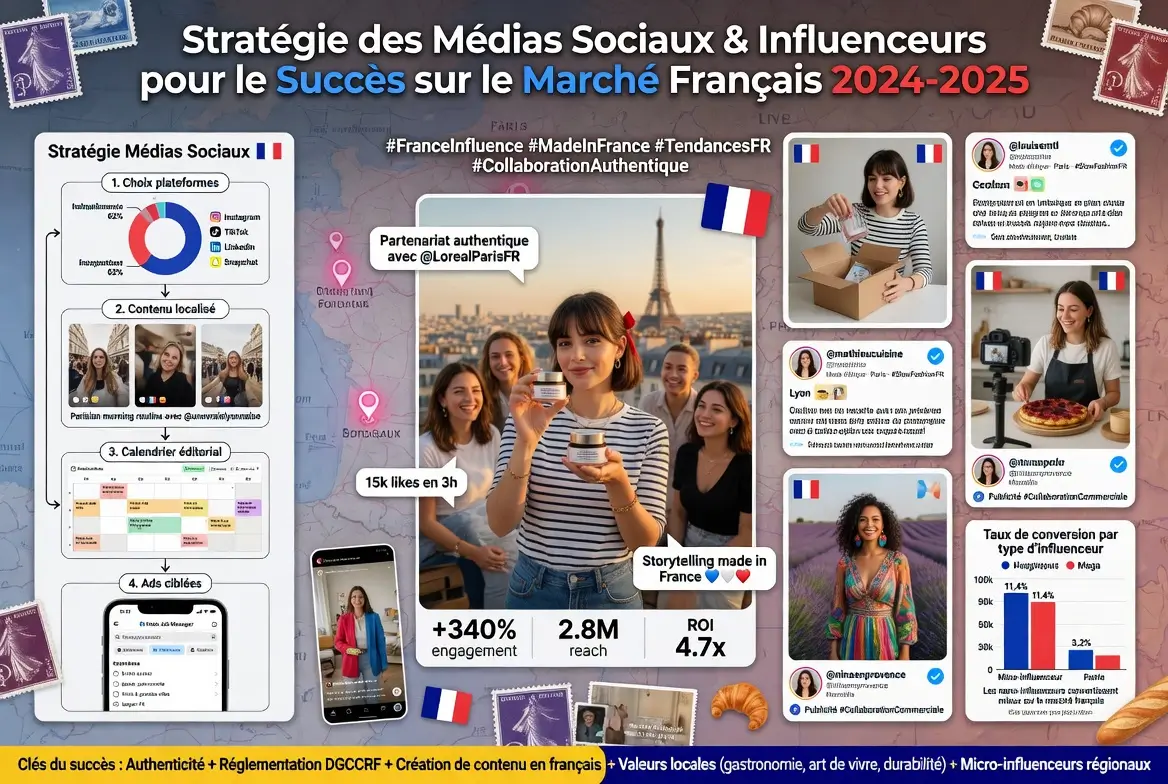
Create a brand in France via social channels requires selecting influencers who really resonate with local audiences rather than just maximizing the number of followers. Micro-influencers (10K-100K subscribers) often deliver a higher ROI compared to celebrity endorsements, especially for niche products or services. Instagram, TikTok, and YouTube dominate French social media consumption, with emerging platforms like BeReal appealing to younger demographics. The authenticity of the content remains essential; French audiences quickly detect and reject overly marketed or insincere messages. Therefore, developing content that tells the story of your brand through local lenses, addressing specific French problems or aspirations, significantly improves campaign performance. LinkedIn also works well for B2B brands building a commercial presence in France.
- Impact of influencers: 75% of subscribers buy on the recommendation of influencers
- Main platforms: Instagram, TikTok, and YouTube generate the highest engagement
- Optimal strategy: Micro-influencers (10K-100K) deliver a higher ROI
- Content authenticity: French audiences reject overly commercial messages
- Local adaptation: Culturally relevant content surpasses generic European campaigns
Consumer behavior and buying models on the French market
French consumers show distinctive buying models that international businesses need to understand when creating a brand in France. Quality, sustainability, and value perception rank higher than quantity or looking for trends in purchasing decisions. This reflects the French cultural focus on craftsmanship and long-term value, explaining the persistent preference for “Made in France” and luxury positioning. Price sensitivity exists, but consumers are happy to pay premiums for perceived superior quality, authentic brand narratives, and environmental responsibility. Therefore, competing only on price typically fails when creating a brand in France, rather, focus on quality, heritage and alignment with French values around sustainability and artisanal production.
Moreover, French consumers research extensively before buying, with peer reviews and recommendations carrying significant weight. Online reviews, especially on specialized platforms like Trustpilot and Verified Purchases sections, influence 68% of French buying decisions. Word of mouth is still powerful, especially via social proof on Instagram and TikTok. Excellent customer service has a direct impact on the brand's reputation, as French consumers expect responsive and competent support in their native language. In practice, companies creating a brand in France who invest in customer service in French, comprehensive product information and transparent brand communication achieve dramatically higher retention and recommendation rates. Payment security also matters, French consumers prefer established and secure payment methods such as PayPal, bank transfers and local services such as Klarna.
- Quality preference: Sustainability and value outperform the trend in buying decisions
- Price sensitivity: Moderate, but the premiums justified by quality and authenticity
- Search behavior: 68% check online reviews before buying
- Loyalty drivers: Customer service in French, transparent communication, sustainability
- Payment security: French consumers prefer established and reliable payment methods
Building brand awareness through content marketing and SEO in France
Content marketing forms the foundation for businesses creating a brand in France, requiring localized keyword research and cultural relevance. French search behavior differs significantly from English-speaking markets; consumers use longer and specific query strings and expect content that addresses nuanced local concerns. SEO in France requires not only translation but real localization, with keywords adapted to French linguistic models and search intent. For example, the query “brand in France” turns into “how to create a brand in France” or “launch a brand in France” in local searches, capturing different intent and audience segments. Successful businesses creating a brand in France invest in bilingual or all-French content strategies from the start rather than treating French as a secondary market.
.webp)
Blog content addressing practical issues, regulatory requirements, marketplace selection, marketplace selection, influencer partnerships, consumer behavior attracts qualified leads and positions your brand as a trustworthy authority. The long content (2000+ words) performs particularly well in French search results, suggesting that depth and completeness signal expertise to local algorithms. Backlinks from French commercial publications, chambers of commerce and sectoral associations amplify authority signals. Our experience shows that French audiences engage more deeply with educational content compared to promotional material, making content marketing an ideal channel for businesses creating a brand in France. Video content, especially YouTube tutorials and business case studies, is generating more and more engagement among French professionals and entrepreneurs looking for market entry advice.
- Location requirement: Real French content, not translations, drives search visibility
- Keyword strategy: Longer and specific queries typical of French search behavior
- Content format: Long content (2000+ words) outperforms shorter articles
- Backlink sources: French trade publications and sectoral associations strengthen authority
- Engaging engine: Preferred educational content over promotional messages
Pricing strategy and financial positioning when creating a brand in France
The pricing strategy has a significant impact on brand perception and market success when creating a brand in France. French consumers equate price to quality, which means that artificially low pricing can damage credibility rather than boost sales. Conversely, premium positioning must be justified through demonstrable quality, heritage or exclusive benefits. Penetration pricing works best for new brands entering competitive categories, but requires clear communication of competitive advantages to avoid appearing cheap. As a result, pricing should reflect your brand's value proposition and target positioning rather than simply under-cutting competitors.
Tax considerations add complexity to pricing decisions for international businesses creating a brand in France. VAT (Value Added Tax) in France varies from 5.5% to 20% depending on the product category, with most goods taxed at 20%. EU businesses must register for VAT; non-EU businesses selling to French consumers typically partner with processing centers in the EU to effectively manage tax obligations. Price transparency is becoming critical, as consumers expect to see final prices including all taxes and shipping costs before checkout. Hidden fees or confusing pricing structures significantly damage trust and increase cart abandonment. Our customers creating a brand in France are constantly improving conversion rates by 15-20% through transparent and clearly communicated pricing in line with local expectations.
- Price-quality equation: Higher prices signal quality to French consumers
- Premium positioning: Requires a clear rationale via quality or heritage
- Penetration pricing: Works for new brands in competitive categories
- VAT structure: Standard rate 20% for most goods; 5.5% for essential products
- Price transparency: Final price visibility improves conversion by 15-20%
“Creating a brand in France requires respect for local regulations, consumer preferences, and market dynamics, and copying strategies from other European countries consistently fails, while culturally appropriate approaches deliver consistent success.”
“French consumers research extensively before buying and reward brands that demonstrate a genuine commitment to quality, sustainability and authentic communication in their language.”
“The 10% annual growth of French e-commerce creates significant opportunities for international brands willing to invest in appropriate market research, localization and long-term positioning.”
“Social media and influencer partnerships represent the fastest growing acquisition channel for brands in France, especially when using micro-influencers aligned with authentic brand values.”
“Successful distribution requires a presence on multiple platforms, and while Amazon maintains global leadership, eight of the top ten French e-commerce sites are local or European specialists with deep market loyalty.”
Market entry schedule and phased expansion strategy
The timing of your market entry when creating a brand in France has a significant impact on success rates and capital efficiency. Q4 (October-December) represents the strongest sales period, driven by holiday shopping and end-of-year buying budgets, making fall optimal for brand launches. However, January-March offers less competition for real estate, marketplaces and media attention, allowing new brands to establish visibility before peak periods. The key consideration involves balancing timing with preparation, and rushing to market before completing regulatory compliance, marketplace set-up, and influencer partnerships consistently fall short compared to longer, methodical approaches. Therefore, international companies creating a brand in France should plan 3-4 months of appropriate market preparation regardless of launch timing.

Phased expansion provides more secure market entry than attempting a full national presence right away. Start with Paris and major urban centers (Lyon, Marseille, Marseille, Toulouse, Nice) (Lyon, Marseille, Toulouse, Nice) where e-commerce penetration is taking place at the highest level and influencer partnerships offer the easiest access. Establish a strong local brand presence via targeted social media campaigns, local influencer partnerships, and community engagement before expanding regionally. This approach reduces initial capital requirements, allows for rapid tests and iterations, and builds momentum for broader national expansion. In practice, companies creating a brand in France implementing phased strategies demonstrate 60% better unit economies compared to those attempting national coverage simultaneously. After 6-12 months of regional success, national expansion through the growth of marketplaces and wider networks of influencers is becoming substantially less risky.
- Optimal seasons: Q4 for sales peaks; Q1 for visibility gains
- Preparation schedule: 3-4 months for regulatory configuration, marketplaces and influencers
- Geographic priority: Paris and major urban centers first
- Expansion phase: 6-12 months of regional success before national expansion
- Risk reduction: The phased approach delivers 60% better unit savings
Frequently asked questions about creating a brand in France
What are the main legal requirements to start a business by creating a brand in France?
The main legal requirements for creating a brand in France include selecting a commercial structure (typically SARL for smaller operations or SAS for growth-oriented businesses), registering with the French tax authorities to obtain a SIRET number, complying with the Toubon Law by ensuring that all marketing materials appear in French, obtaining ARPP approval for advertising campaigns prior to launch, and registering with relevant sectoral regulators according to your product category. Additionally, you must establish a registered office address in France, open a French commercial bank account, and maintain appropriate accounting records. For international businesses, working with a French accountant or a commercial training department significantly streamlines this process and ensures compliance with evolving regulations. Non-EU businesses may face additional requirements regarding VAT registration and data management under GDPR.
What is the importance of the French language requirement when creating a brand in France?
Compliance with the French language is absolutely critical when creating a brand in France, as the Toubon Law mandates that all advertising content, packaging, user interfaces and contractual materials appear primarily in French. Violations can result in significant fines, legal actions, and brand damage among French consumers who see linguistic compliance as respect for their culture and legal system. This does not mean that content in English is entirely forbidden, rather, it means that French should be the dominant language and all essential information should be available in French first. The packaging should show product descriptions in French, ingredients, and instructions for use. Digital platforms must provide interfaces in French and customer support. Many international brands successfully maintain bilingual approaches with French as a first language and English as a secondary language, but the French version must also be professional and comprehensive. Working with native French speakers during content creation, translation, and compliance reviews prevents costly mistakes that damage brand credibility.
Which e-commerce platforms should international brands prioritize when creating a brand in France?
Although Amazon remains the largest e-commerce platform in France, prioritize local and specialized European platforms for faster growth and better consumer confidence. Cdiscount commands significant market loyalty with a strong performance in the electronics and decoration categories. La Redoute maintains influence in fashion and furniture, especially among established consumer bases. Zalando.fr has become the essential fashion destination for French buyers with categorically superior expertise compared to Amazon. For luxury brands, SSENSE and Farfetch offer credibility and targeted audiences. The most successful businesses creating a brand in France establish a simultaneous presence on 3-4 major platforms rather than relying solely on Amazon. In addition, developing a direct-to-consumer channel via your website and social commerce (Instagram Shop, TikTok Shop) creates independence from marketplace algorithms and fees. The optimal strategy combines the visibility of marketplaces for scale with direct channels for profitability.
What social media and influencer strategy works best to create a brand in France?
The most effective approach to creating a brand in France combines micro-influencers (10K-100K subscribers) with authentic and culturally relevant content rather than pursuing celebrity endorsements or generic European campaigns. French audiences react strongly to authentic recommendations from relatable creators who address local needs and values. Instagram dominates for visual products and lifestyle brands, while TikTok is generating exceptional growth among Gen Z consumers. YouTube performs well for detailed product demonstrations and educational content. LinkedIn is valuable for B2B brands and professional services. Nano-influencers (1K-10K subscribers) often deliver a higher ROI for niche products. The key success factor involves authentic alignment between the influencer's values and your brand; French audiences immediately recognize and reject inauthentic partnerships. Budget allocation should prioritize long-term ambassador relationships over one-off campaigns, as consistency builds credibility. Performance-based compensation (sales commission) often outweighs fixed-fee arrangements, aligning influencer incentives with your business goals.
How long does it typically take to establish a successful brand in France?
Establishing a successful brand in France typically requires 12-24 months from market entry to sustainable profitability, although this timeline varies significantly depending on product category, competitive intensity, and capital investment. The first 3-4 months focus on market preparation, legal entity formation, regulatory compliance, marketplace configuration and influencer partnerships. Months 5-8 typically show early sales and customer acquisition through paid marketing and influencer campaigns. Months 9-12 involve optimization based on performance data, customer feedback, and competitive positioning. Most businesses postpone achieving initial profitability until 14-18 months, assuming adequate marketing investment and adjusting the product to the market. Mature brands with meaningful follow-up product lines accelerate timelines via cross-selling to established customer bases. Businesses that underestimate preparation time or lack adequate capital often face setbacks that require extended payback periods. The most predictable path to success involves geographic expansion in phases (Paris first, then national) rather than attempting a full national presence right away, reducing both capital and execution risk.
What pricing strategy should international brands use when creating a brand in France?
French consumers strongly equate price to quality, making competitive pricing insufficient as an autonomous strategy when creating a brand in France. Premium positioning works exceptionally well if it is justified through demonstrable quality, heritage, sustainability credentials, or the exclusive benefits of competitors that are unavailable. Penetration pricing (initially low prices) works for new brands in commoditized categories but requires clear communication of competitive advantages to avoid damaging credibility. Value pricing, positioned between third budget and luxury, calls on the substantial median market of French consumers seeking balanced quality and accessibility. Ensure that all pricing displays show total amounts including VAT and shipping costs prior to checkout to avoid cart abandonment driven by surprise fees. Regularly monitor competing pricing but avoid pure price competition; rather, differentiate yourself through superior product quality, customer service, warranty programs, or access to exclusive content. Psychological pricing tactics common in other markets (9.99 euros instead of 10 euros) work less effectively in France, where consumers perceive such pricing as slightly misleading. Transparent and consistent pricing aligned with perceived value delivers superior customer relationships and brand equity over the long term compared to aggressive discount strategies.






.avif)